Camping in the rain can still be enjoyable when you prepare properly. The goal is not only to stop water from entering your tent. You also need to choose a safe campsite, pitch the tent correctly, protect dry gear, and manage condensation.
A quality tent helps, but good setup matters just as much. Even an expensive tent can become uncomfortable if it is pitched in a low spot, has a loose rainfly, or is surrounded by wet gear.
Quick answer
To camp comfortably in the rain:
- Check the forecast and know where safe shelter is.
- Choose high, well-drained ground away from flood-prone areas.
- Pitch the tent before rain begins when possible.
- Use a correctly sized footprint.
- Stake out the rainfly and guylines tightly.
- Keep wet gear outside the sleeping area.
- Maintain ventilation to limit condensation.
- Leave the tent for a hard-roofed vehicle or enclosed building if there is lightning.
Before you leave: prepare for wet weather
Rainy camping starts with preparation at home. Set up your tent before the trip to confirm that all poles, stakes, guylines, and rainfly attachments are present. A rainy evening at the campsite is the wrong moment to discover that a stake is missing or that you do not remember how the fly attaches.
Pack these essentials:
- Full-coverage rainfly
- Footprint sized for your exact tent
- Extra stakes and guylines
- Waterproof or water-resistant storage bags
- Dry bags for sleeping gear and electronics
- Rain jackets and waterproof footwear
- Microfiber towels
- A tarp for a sheltered cooking or sitting area, where permitted
- Headlamps for pitching camp in low light
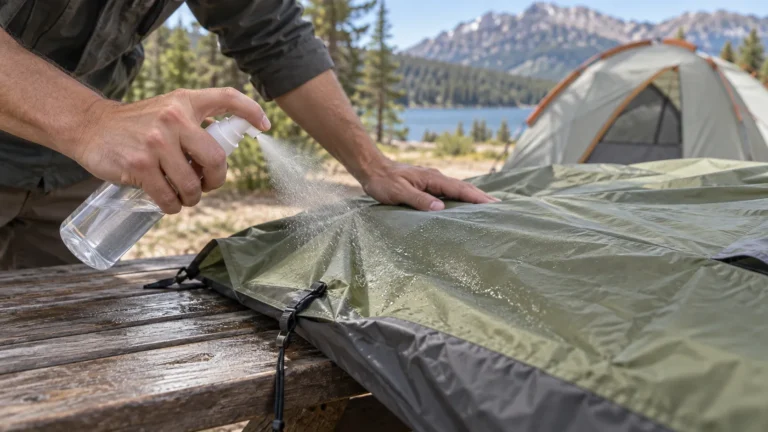
If your tent has not been used for a while, inspect its seams and rainfly first. Read How to Waterproof a Camping Tent if water no longer beads on the outside or the seams have started leaking.
Choose the right campsite
Where you pitch your tent can make a larger difference than the tent itself.
Choose higher, well-drained ground
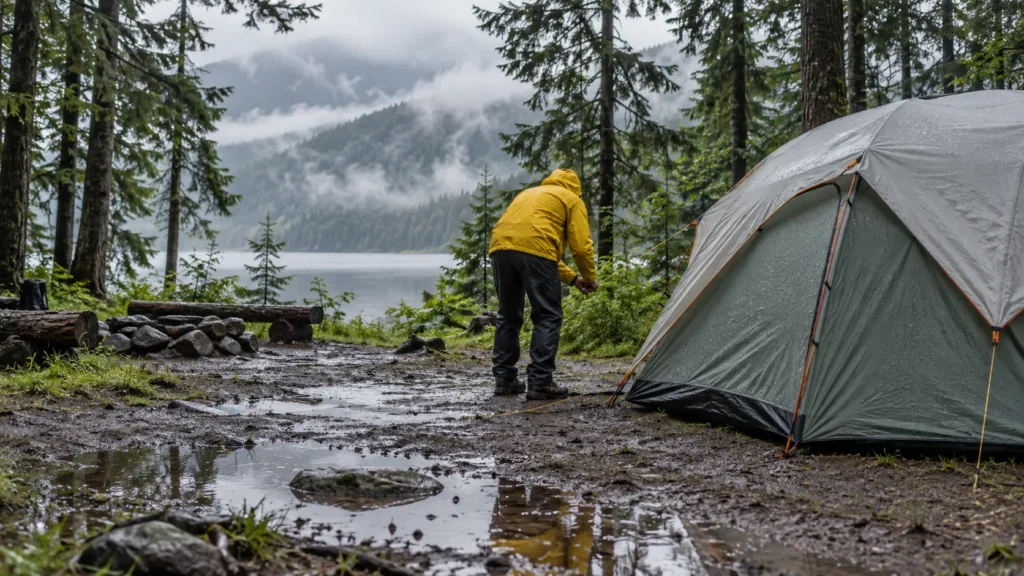
Avoid dips, dry streambeds, drainage channels, and low areas between hills. Rainwater can collect or move through these places quickly during a storm. Look for level ground that is slightly elevated and naturally drains well.
Avoid hazards above and around you
Do not camp beneath dead branches, damaged trees, or unstable limbs. Strong wind and saturated ground can cause branches to fall. Stay aware of nearby streams, ravines, and slopes that may flood. Follow all campground guidance and weather alerts.
Point the tent away from wind-driven rain
If possible, place the doors away from the direction of the wind. This reduces the chance of rain blowing inside when you enter or exit the tent.
Use a footprint correctly
A footprint protects the floor from abrasion and ground moisture. However, it must be smaller than the tent floor. A footprint that extends beyond the tent can collect rainwater and channel it underneath the tent. If you use a tarp rather than a purpose-built footprint, fold it under until it is fully inside the tent’s perimeter.
Pitch the tent for rain
A proper rain setup should keep the fly taut, create space between the fly and inner tent, and secure the tent against wind.
Stake down the corners
Stake the tent corners first, especially if wind is expected. This prevents the tent from moving while you assemble poles and attach the rainfly.
Attach the rainfly fully
Use every required buckle, clip, Velcro wrap, and tension strap. The rainfly should not touch the inner tent body, because contact can transfer moisture inside.
Tighten the rainfly evenly
Tension all corners evenly. A loose fly can sag, collect water, flap in wind, and touch the inner tent. Check it again after rain begins because many fabrics stretch slightly when wet.
Use guylines
Guylines improve stability and help keep the rainfly away from the tent body. Use the windward-side guylines at minimum, and use all recommended guylines if heavy rain or wind is forecast.
Keep your sleeping area dry
The inside of the tent should be reserved for sleeping gear and dry clothing.
- Store wet shoes in a vestibule or covered area outside the tent.
- Keep backpacks in waterproof bags or under the vestibule.
- Do not bring wet jackets inside unless you have no other option.
- Keep sleeping bags, pads, and spare clothes away from tent walls.
- Use dry bags for electronics, medication, and spare layers.
For family camping, a tent with a large vestibule can make rainy trips much easier. See our Best Waterproof Tents for Rain guide for suitable options.
Manage condensation
A wet tent interior is not always caused by a leak. Condensation forms when warm, humid air inside the tent meets a cooler rainfly or tent wall.
To reduce condensation:
- Open roof vents whenever conditions allow.
- Keep doors partially vented if rain is not blowing directly inside.
- Do not dry soaked clothes inside the tent.
- Keep wet boots and jackets in the vestibule.
- Avoid overcrowding a tent.
- Choose a campsite with good drainage and airflow.
Never close every vent just because it is raining. Ventilation is usually necessary to reduce moisture buildup.
Create a dry camp routine
- Remove wet footwear before entering the tent.
- Store wet gear in the vestibule.
- Keep one dry clothing set sealed in a waterproof bag.
- Use a groundsheet or tarp for a sitting area, if campground rules allow it.
- Pack food and cooking gear separately from sleeping gear.
- Keep a headlamp available inside the tent.
- Check the rainfly tension before sleeping.
Do not cook inside a tent. Fuel-burning stoves and grills create fire and carbon-monoxide risks, especially in enclosed spaces.
What to do during heavy rain
Stay calm and inspect the tent before the situation becomes serious. Check that the rainfly is taut, clear leaves or debris that may block drainage around the tent, keep tent doors closed when rain is blowing sideways, and move gear away from tent walls and floor edges.
Do not dig trenches around your tent; this can damage campsites and does not solve unsafe site selection. If the campsite begins flooding, relocate only when it is safe to do so and follow campground instructions.
Lightning changes everything
A tent does not provide protection from lightning.
If you hear thunder or see lightning, move immediately to a substantial enclosed building or a hard-roofed vehicle with the windows closed. Do not stay in the tent, under a picnic shelter, or beneath a tree.
Wait at least 30 minutes after the last thunder before returning to camp.
Frequently asked questions
Can a tent keep you dry in heavy rain?
Yes, a well-maintained tent with a full rainfly, sealed seams, a protected floor, and correct setup can keep you dry in normal rainy conditions. Extreme storms, flooding, poor campsite selection, and damaged equipment create additional risks.
Should I put a tarp over my tent?
Only use a tarp if it can be safely secured without damaging the tent or collecting water. A tent’s own rainfly should remain the primary weather barrier.
Why is my tent wet inside even though it did not leak?
It may be condensation. Improve ventilation, keep wet gear outside, and avoid touching the inner wall with sleeping bags or clothing.
Should I camp if thunderstorms are forecast?
Check official local forecasts and campground alerts. If thunderstorms are likely, know where your nearest enclosed building or hard-roofed vehicle is before setting up camp.
Our Final Verdict
Successful rainy camping depends on the whole setup, not the tent alone. Choose high, well-drained ground, tension the rainfly and guylines, keep wet gear outside the sleeping area, and maintain ventilation. If lightning threatens or the site starts flooding, leave the tent and move to safer enclosed shelter.
Compare rain-ready tents →